
Of Founders and Foundations
The American Awakening Is 250 Years Old. And It’s Just Getting Started.

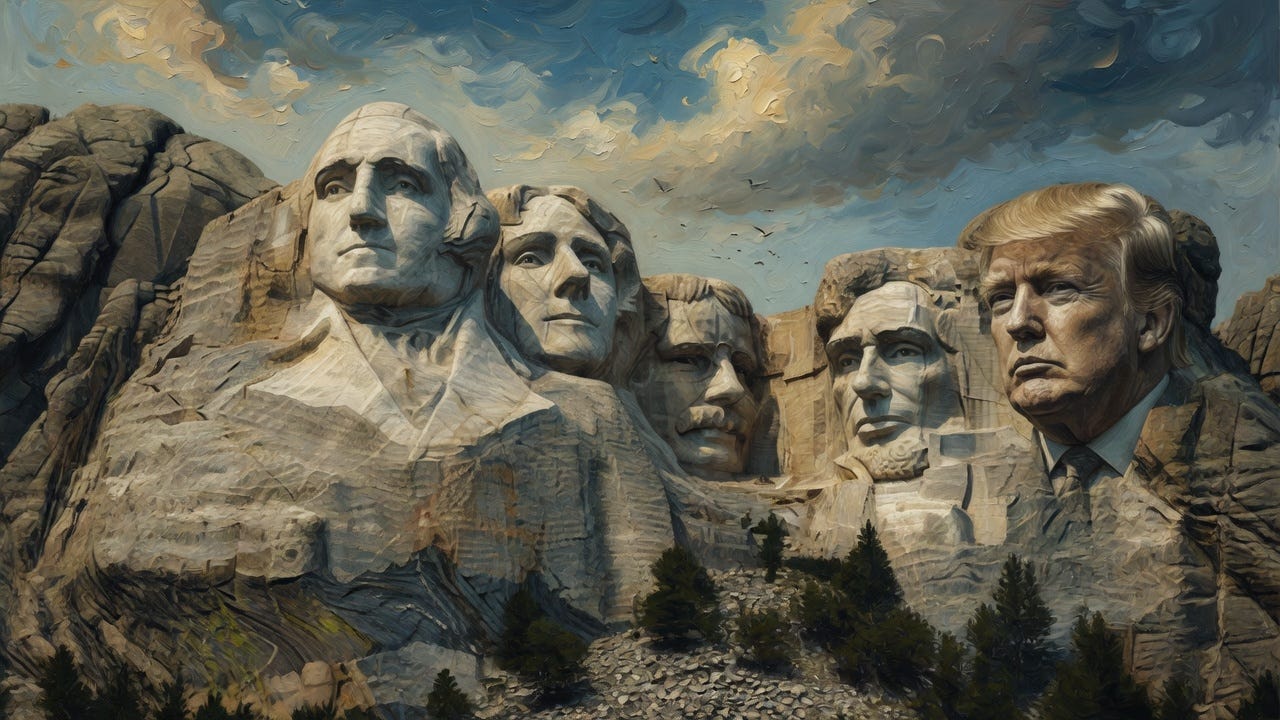
The Semiquincentennial.
It’s a word almost none of us knew before this year, and it’s a word I had to look up about half a dozen times to make sure I didn’t screw up the intro to what will be more of a stream of consciousness rather than an analytical essay for a change.
Often, this readership tends to enjoy the former more than the latter.
But then, we’ll only use the word once in this writing, and since we already did, let’s discuss America’s 250th.
Let’s discuss the Republic, the man who currently leads it and us … and yes, let’s discuss who exactly ‘we’ are in this emergent zeitgeist that is at once revelatory as it is recollective.
As we stand here today—myself fresh off of my third trip in as many years to the Dakotas, funnily enough—the Republic stages its commemorations with the precision of institutions that have long treated ritual as a substitute for reckoning.
Stages rise on the National Mall, programs circulate and the accustomed language of unity and reflection moves through networks that for years have framed any sustained scrutiny of their own operations as a form of disorder, if not outright rebellion.
For those who have moved inside the contest within a contest, the game within the game and the war comprised of wars and the stories told about them and which they are made of, this moment means something more, no matter how many times they’ve tried to make it mean so much less, and perhaps because of it, the first paradox of a few we’ll discuss herein.
To wit, since the moment a single figure stepped off of a golden escalator and declined the inherited language of a System designed to destroy the Sovereign, the surface observance of America’s 250th registers as both accurate in calendar terms and incomplete in its account of what has actually shifted.
What has actually changed.
And a lot has changed, my friends.
Most of it for the better, despite much bellyaching to the contrary, some of it no doubt contributed by me at times. And perhaps by you.
The deeper movement and the deeper moment, then that is this celebtration is not located in the pageantry.
For some of us. For all of you, it resides in the cumulative effect of a decade spent contesting the story that once encircled the population without enclosing it, thereby attaining dominance without provoking the very resistance the nation was founded on in the first place.
And we would be remiss, again if we did not acknowledge what MUST be acknowledged if we’re to operate from principles not just of logos, but of spirit, and of mind and heart married.
Rather, if we did not acknowledge WHO.
This contest above all—that between the awakening sovereigns and the scions of the Invisible Enemy acquired its decisive catalyst when Donald Trump entered the field not as a conventional candidate seeking institutional validation, but as a Biblical disruptor whose presence has altered the paradigm itself by first detonating the cost structure of the game itself, and for all those playing it.
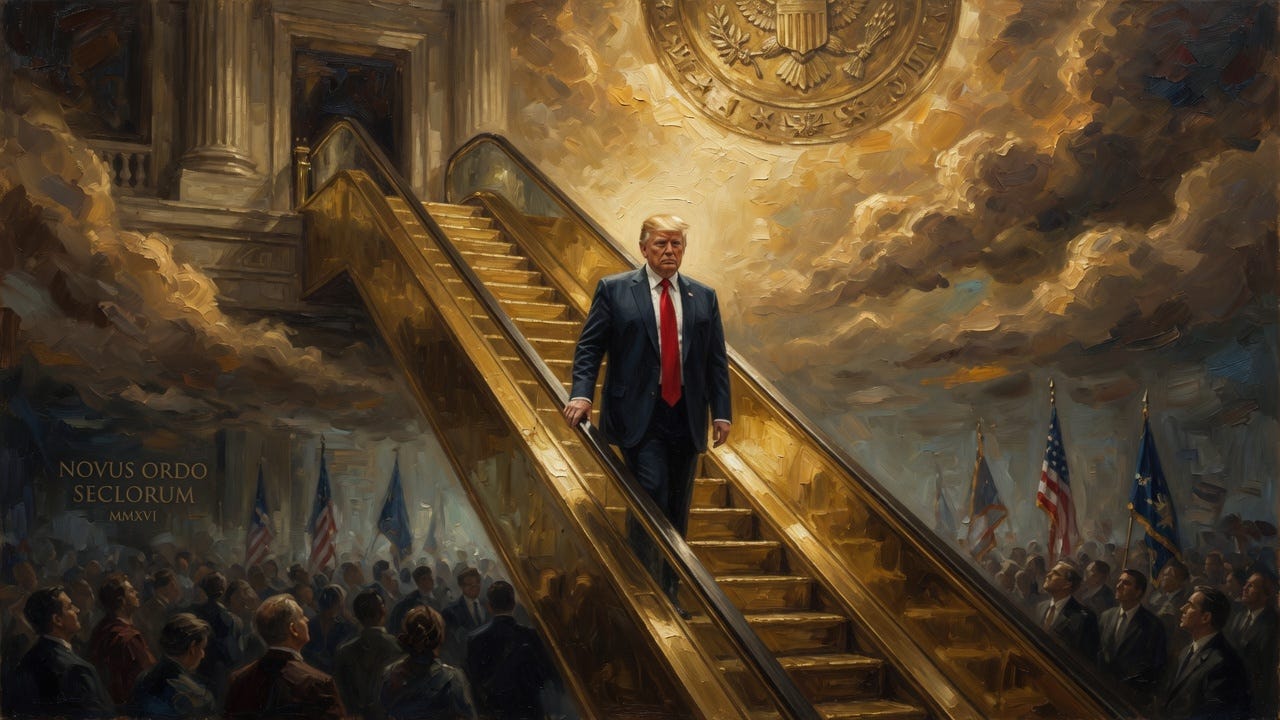
Prior to 2015, the Globalist Deep State and its aligned constellations—intelligence agencies operating as narrative nodes, media organizations functioning as an organized protectorate rather than a truly-independent press, an administrative apparatus grown far beyond electoral reach, an electorate itself beyond reproach by the common man and cultural institutions systematically repurposed for psychological management rather than unshackling—could proceed on the assumption that coordinated recognition, nevermind resistance from the enslaved and asleep populace was not only unlikely, but that, even if it did occur, it could be managed in the way it always was, through some paradigm-forming rather than shattering change event, often in the form of a mass trauma event, or even a World War.
And each of which would be preceded with and almost entirely comprised of a story.
Which is quite where we come in, or rather, where I have endeavored to.
Each subsequent deployment by the machine in the aftermath of the emergence of the Trump Dialectic required the exposure of additional machinery to maintain the System’s now-halting momentum: the Russia Collusion architecture, pandemic control templates, the substitution of an endless and exhausting parade of lawfare in the place of true electoral accountability, which doesn’t even address the fact that our elections themselves are still largely performative … ie: fake, something we can and WILL address as a peoples, I hope, in due time.
Contrary to what many of us used to believe, however, it is clear now with the benefit of a decade of hindsight that Trump did not need to prevail in every visible engagement with the Invisible Enemy.
He needed only to keep said enemy exposed long enough for observers to study its contours under the light of day, and of course, of dawning awakening, with one accelerating the other in an Ouroborosian loop that looks like a black hole to the one side and a portal to a new world to the other.
Over ten years, that exposure has compounded.
What began as isolated pockets of autistic pattern recognition among independent researchers has since scaled into a distributed network capable of forcing the machine into visibility faster than its protectorate can reframe in real time.
Trump is not revered by this audience—by me—because he has been a great president, although he has.
He is revered because he willingly and by design became the focal point on which the enemy could concentrate informational, ideological and mass psychological fire—when they’re not aiming kinetics in his direction in a very literal manner—and around which this decentralized alignment could form without requiring ideological uniformity or a central command and control structure, even if Trump largely stood in for the former and the Q Drops for the latter, at least for many.
No matter the mechanism or the path, however, for those who had carried the weight of suspicion rebranded as conspiracy through the preceding years, Trump’s persistence supplied validation that the patterns they—that WE had denoted—were not flawed artifacts of individual perception, but features of an architecture that could no longer operate in the dark, and which was being mapped in real time by an emergent many whose minds perhaps bear an architecture as strange as it is to the normie layers of the Collective Mind as it is caustic to those who would seek to control that very thing.
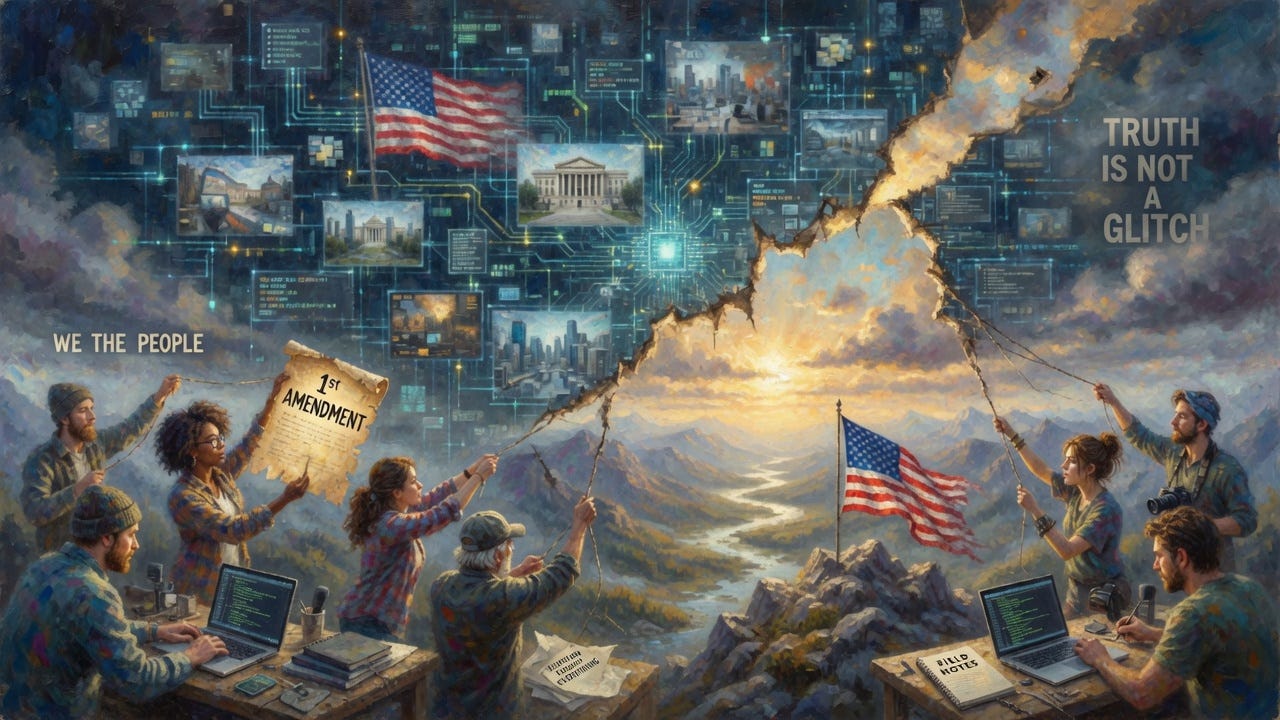
At THIS moment in a history that is still being written, then, Trump’s role carries additional weight, as the unipolar enforcement mechanisms the cartel once relied upon are visibly under strain, to put it exceedingly mildly, and so, the continued and amplified presence of the figure who has defined himself in opposition to what opposes us can only redouble our resolve in direct preportion to how much it saps that of the enemy.
The historical weight of this pattern becomes clearer when placed against the methods of the men whose signatures the Republic now ritualizes, and mostly for good reason.
That said, the contemporary habit of remembering the Founding Fathers as consensus-seeking deliberators engaged in high-minded negotiation toward a desired harmonious compact misreads both their intentions and their eventual achievement, in my estimation.
To wit, these founders were not petitioning the empire for incremental reform within a frame it had already defined.
They were asserting sovereignty unilaterally, and codifying that assertion through a document whose language was crafted not so much to justify the rupture of that empiric apparatus, but more so to provoke it into coming to pass by appealing to domestic and foreign audiences alike and at once.
The war that followed was as expected as it was irregular, conducted as it was BY irregulars, and in irregular domains against regulars in regular domains.
As many minds reading these words know full well, this multi-domain conflict known as the American Revolution succeeded largely because of its irregularity, its asymmetry … hell, even its irrationality, at least in pockets, especially against an adversary accustomed to linear thinking and linear doing, systemites who expected free sovereigns known as colonists to behave as rational actors inside existing rules they had now defined themselves in direct opposition to.
During the absolute blitz of historical melodrama that followed the original Declaration, the battlespace was transformed not through planning or design—at least, not through any design of Man’s,—but through constant and almost-instinctual striving, wherein committees of correspondence operated as early information networks, circulating intelligence and coordinating resistance without awaiting permission from a single center, pamphleteers and printers waged sustained psychological operations against both loyalist populations and the British public alike, militias and privateers contested supply lines and economic interests through decentralized initiatives that no continental command fully controlled, and where diplomatic backchannels pursued alliances the British regarded as existential threats … some of which may be BACK in the offing today.
There was no single general or central directorate that dictated every action in 1775 or 1776.
Alignment, rather derived from the shared and stalwart refusal of the imperial template and the shared commitment to first principles on both logical and spiritual grounds, and perhaps the former MORE so than the latter, which might be the deciding lesson we still need to draw from further comparison between that time and this one.
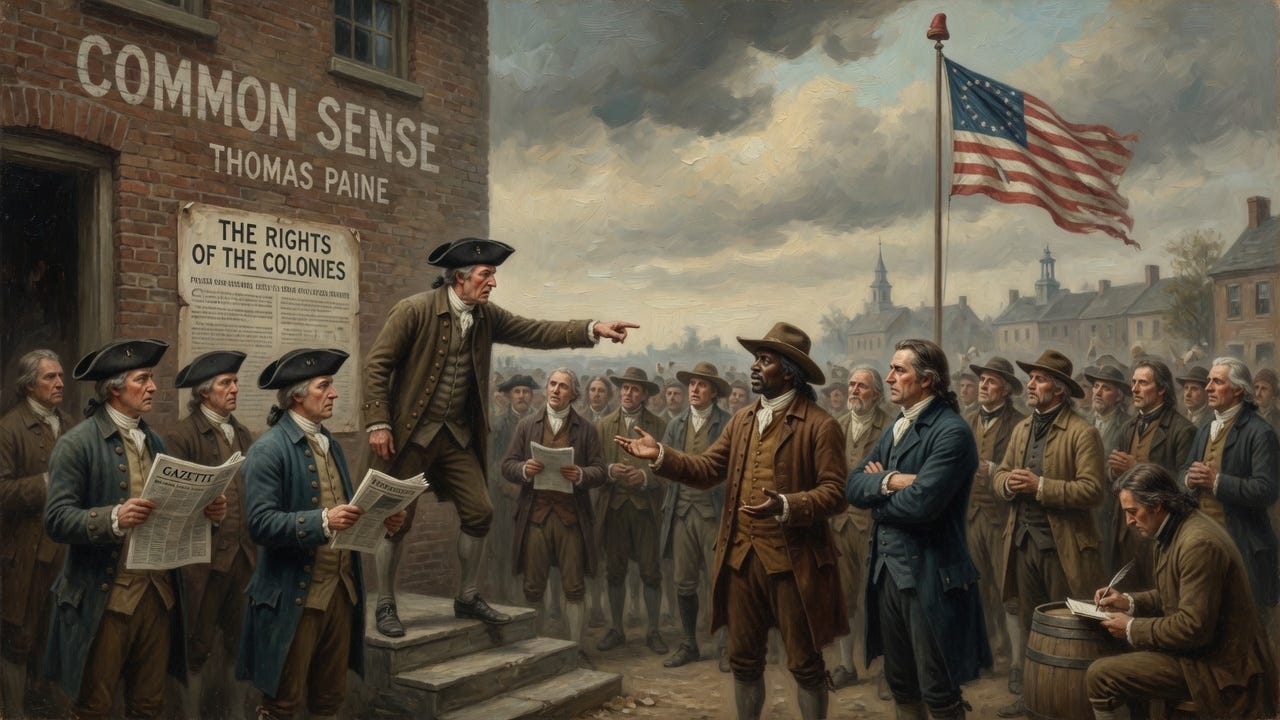
Of course, internal factions of emergent Americana—regional, economic and religious—were real and persistent, and still are, yet they did not prevent the formation of a beautifully paradoxical decentralized collective capable of raising the cumulative cost of imperial enforcement until the adversary was forced to choose accommodation over indefinite attrition, another case, perhaps of the Americans of that time ironically showing mercy where eradication—of the System itself—would now suffice.
This same paradox defines the modern Info War and the distributed network of researchers, authors, podcasters and anonymous decoders who have operated inside it since 2015, and who have largely defined themselves according to its ways and wiles.
These are not subordinates executing directives from a headquarters, even if some believe themselves to be exactly that.
They—WE—are a loose, often fractious coalition bound primarily by the shared recognition that the narrative the enemy had written for us and its operational reality MUST and so, HAS diverged, or been diverted, if not defeated.
Alignment within these fractious factions, then occurs through pattern recognition rather than command, where an observation posted on one platform can be tested, refined or extended across others without requiring approval from any central node, and whose disruptive capability may lie dormant before the right mind with the right means picks up the thread some time later, which can be measured in minutes, hours, days … and sometimes years, so deeply has the web been weaved, and so necessary and layered the unweaving.
The advantages this structure confers in the narrative and psychological domains mirror those the Founders exploited: a centralized adversary accustomed to hierarchy finds it difficult to decapitate or co-opt a network whose coherence derives from first principles rather than organizational charts, from moral absolutism—even if I find that particular coding lacking in many minds in this movement—rather than relativism.
The Globalist Deep State can deplatform specific accounts, subject individual researchers to lawfare or inject controlled opposition to fragment coordinated responses from isolated segments of this decentralized collective … and they have.
That said, they cannot and they have not been able to easily recentralize discernment itself in a growing Mindscape wherein most observers both within and without the Info War have learned to treat official stories as provisional data rather than authoritative doctrine, with some—including yours truly—even going so far as to brand the latter itself as a prime reverse indicator often more useful than active first principles logos when it comes to figureing out what is what and who is who in a war comprised almost entirely of information and its antithesis.
Both the eighteenth-century irregulars and the present digital soldiers have operated as paradoxical decentralized collectives, then, fragmented in form, but aligned in function, capable of rapid adaptation in the information domain while the established power structures remain blind to the cumulative effect of our distributed actions and multitudinous intentions.
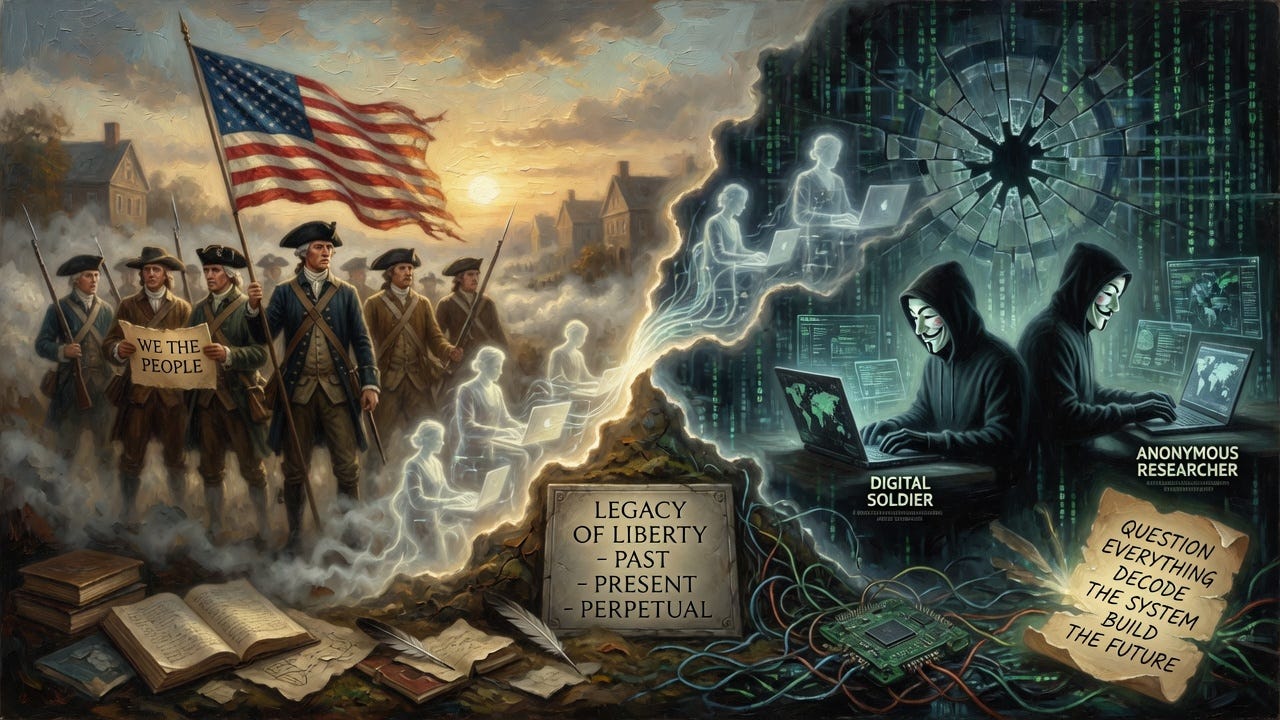
The progress we have registered across the last decade and across all domains therefore carries the weight of continuity rather than the appearance of a fracturing the enemy expected, even if there have been shatterpoints along the way.
And that’s just in the informational, mass psychological and cultural battlespaces we can affect.
On actual grounds represented more completely by Trump himself and the Sovereign Alliance I first named back in 2022 when I launched this publication, the rerouting of energy corridors away from cartel dependency, the management of proxy conflicts through off-ramps rather than new forever wars of choice and the reassertion of mutual trade and financial architecture as instruments of sovereignty represent colossal shifts in material reality that will compound over time, and in our favor.
On narrative grounds—my personal focus—the erosion of legacy authority and authoritarianism is no longer a matter of speculation. The phrases once deployed as conclusive now register for a growing audience as confessions of intent.
The Overton Window on structural questions—the scope and historical behavior of the administrative state, the use of intelligence capabilities for domestic narrative control, the function of transnational institutions in constraining national decision-making among MANY other cognitive theaters—has moved because enough distributed observers documented the patterns until such a point as denial has become more costly than acknowledgment.
Culturally and on mass psychological grounds, the change is more diffuse, yet more durable.
Parallel education networks and independent media architectures have taken root as durable alternatives rather than temporary protests.
The psychological posture of significant portions of the population has shifted from the conditioned acceptance of managed decline to active scrutiny of the stories that sustain it.
This shift did not arrive through a single revelation or a viral moment.
It compounded through repetition and pattern recognition cemented across years, and which we hope will echo through eternity, or at least through the next Founding, and the one after that, as the previous one echoes to us today, and whose memories we must pick up and remake.
Each exposure, each revelation, each recognition and each attempt to go where others dare not has added density to a vast alternative map of reality that IS reality, and that a growing number of people can now navigate without constant reference to the legend they were once poised to inherit.
The tensions that remain in this decentralized collective we call a Truth Community, that we call a New America that recalls the old one do not threaten the experiment, then … but define it.
They do not indicate that the mission has stalled. They indicate that a system whose primary advantage was narrative monopoly and institutional continuity is now required to defend those once-advantages in the open, and in the digital age we would seek to dominate.
And that we have.
Bureaucratic institutions designed to outlast our supposedly-elected leadership yield terrain only under sustained, multi-cycle pressure, and we are in one such cycle now, one we would and should seek to accelerate.
Economic interdependencies cultivated over decades generate real frictions when reordered, and those frictions can be amplified to create the cultural and then political demand for reversal.
Cultural indoctrination and decay that has operated through the strategic capture of education and entertainment platforms and apparatus across generations will not reverse through exposure alone; the process instead requires the slower construction of alternative transmission mechanisms paving the way toward a new consensus formation against consensus itself, so long as whatever is built on the new anti-platform is built on the broad, general and yet, forceful agreement on what is RIGHT and what is WRONG rather than what is TRUE and what is FALSE, a dialectic we have been trapped in for too long, and from which we must escape if we are to live in accordance with God’s Design, and with the only Plan that truly matters, one that much fewer than 10 know the contours of, and one we need not, so long as we live right, and live well.
And you know what?
I believe this process is happening.
And I believe this process is accelerating.
I believe it resembles—has resembled, for the last decade and more—a breaking apart en route to a coming together.
A common striving to destroy that which has been and would be in order to build that which must be and will be.
The ensuing panic of the machine we are inherently opposed to is the predictable rear-guard action of an order losing its capacity to enforce compliance through control, and defense through de facto invisibility.
Decentralized collectives do not defeat such orders through any single decisive engagement.
Instead, they raise the cumulative cost to the System across domains until the adversary must choose between escalation that further exposes its methods or concession that concedes ground it once held without contest.
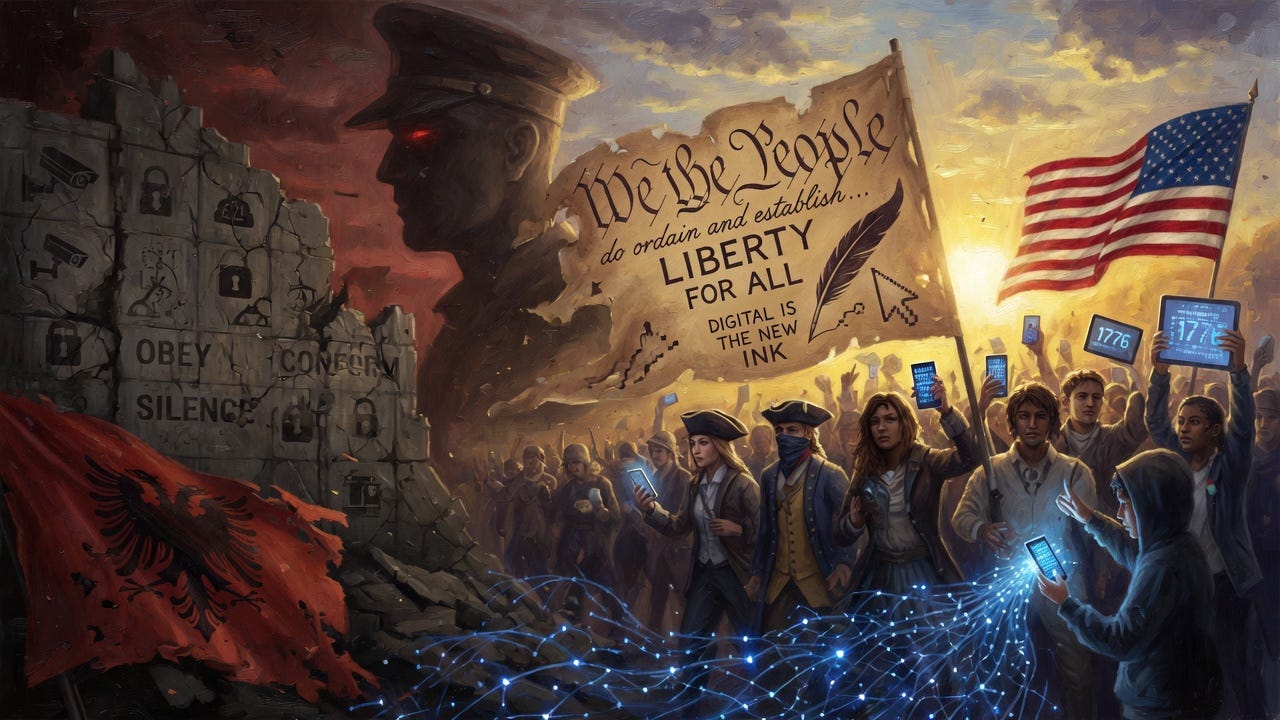
The comparison between the Founders’ irregulars and the present Info Warriors therefore supplies operational precedent rather than mere historical analogy.
Both operated as decentralized collectives in asymmetric conflicts against centralized powers that expected a rivaled hierarchy that would beget a linear response.
Something they could counter. Something they could understand.
Both the Founders, however and this community of New Americans instead derived coherence from shared opposition rather than communion.
Much like the Sovereign Alliance I named and spend the bulk of my time writing about, the New Americans are representative of an alliance AGAINST something rather than FOR something, which is another in a long line of necessary paradoxes we must embrace if ever we’re to have the means, the methods and the mindshare to kickstart the American Renaissance.
Both the Founders and this community—the First Americans and the New Americans—exploited advantages in the narrative and psychological domains that rigid, template-setting and following organizations find difficult to counter.
The Founders moved from that decentralized resistance to the design of institutions intended to manage perpetual tension without surrendering sovereignty to any single node, a decision that skirted along the lines of the very consensus formation I would argue we must avoid, and so, perhaps representative of the one true weakness of their otherwise-earnest designs.
The digital soldiers and distributed researchers who have contested the central narrative since 2015 have performed the analogous first phase: they have made the invisible visible and raised the cost of continued narrative enforcement until the old cartel can no longer assume passive reception, and so, the phase that now follows requires the same distributed initiative applied to slower, more deliberate construction now that the demolition phase appears to be nearing a cascade of climaxes the enemy will find impossible to claw their way back from.
The cleared space created by the controlled burn of the old narrative and actual architecture of the machine will not fill itself with forms aligned to sovereignty and First Principles. That labor requires the paradoxical alignment us irregulars have already demonstrated—sufficient shared orientation around Goodness instead of Greatness to prevent fragmentation from becoming dissolution, a needed subtlety of approach that can bring us into the Golden Age we would have and that we would leave to our children and grandchildren without the imposition of a centralized control structure that would replicate the vulnerabilities of the very order being replaced.
At 250, the Republic arrives at a checkpoint in that transition rather than at its conclusion.
The decentralized collective that has contested the central narrative and the order that birthed it and that it has helped to perpetuate for a decade is now positioned to begin authoring the conditions of the next era rather than remaining indefinitely in a posture of disruption.
We find ourselves now at the inflection point between the Breaking and the Building, in other words, and so, each of us must choose which he would focus on, with both being necessary, and with both bearing consequence and promise in equal measure.
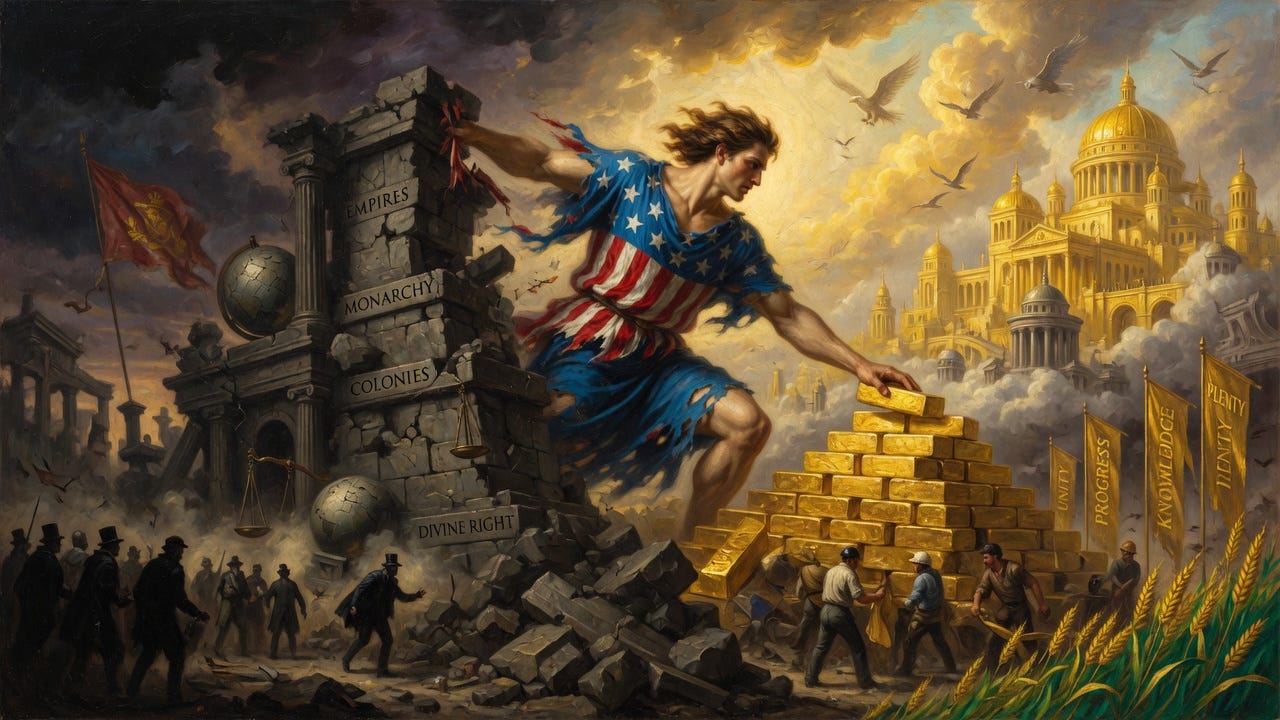
The Founders understood that the assertion of sovereignty was the beginning of construction, not its end.
They moved from irregular resistance across dimensional domains to the patient work of building parallel structures and institutional forms capable of carrying first principles forward through time.
The present irregulars—you and I—have demonstrated the same capacity in the digital domain, which is comprised of or reflective of all domains at once in an era as contentious as it is unique, as vulnerable to control as it is to shock and disruption.
The task that remains is the task at hand—to extend the methods of Building and Breaking we have perfected, often below our conscious regard into the cleared space the fires we have spread would leave behind before the soil hardens and cracks underfoot, to build education that transmits living memory rather than curated forgetting, media architectures that prioritize discernment over amplification, economic forms that reduce dependency on systemic rails and cultural practices that treat sovereignty as a lived and continuous discipline rather than as an inherited abstraction.
This work does not require consensus with the remnants of the order that we would leave behind, nor does it require the mirroring of the anti-Order the Founders attempted to put in place in order to preserve what they had built.
This work only requires the continued alignment of our decentralized initiative around the principle that sovereignty radiates from both destruction and construction, and that both can be sustained indefinitely, and that both must be, in keeping with God’s design, himself both a Destroyer and a Creator, often in equal measure and equal love, no matter what each looks like at the time.
Some of the Founders were Breakers who never took to building.
Some were the opposite.
It was the dialogue between them—more so, the discord of their disagreements—that build the foundations we toil upon today.
They were not a monolith, and nor should we endeavor to be.
They were not anything more than us, and certainly they were not anything less.
They should be remembered—and they are—but they should not be deified.
They were Men.
As are We.
They were the highest and the lowest.
And so should we consider ourselves.
So, what should we recognize at the current moment among moments?
That the ground the old protectorate poured over the foundations of the founders is no longer as stable as when the first rents appeared in the veil, many scored by Donald Trump himself, whose name should live in infamy, and whose legacy should be comprised of equal parts Building and Breaking, Breaking and Building, as ours might be.
The irregulars of the eighteenth century and the digital soldiers of the present have both shown that such anti-collectives can rise faster than the old order can fall, and so we shall, as the same methods we have used to pull apart the System at the seams now makes possible the slower work of building forms that radiate sovereignty outward rather than merely defending against its further erosion for the generations ahead.
At 250, then, the Republic is still deciding what it will become.
What it will remember.
What it must choose to forget.
The tools for that decision sit in more hands than the Collectorate ever intended, and that distribution is the direct result of a decade of pointed decentralization that we would continue.
That we must continue.
And yet, that we must do so in common cause, and through cooperation rather than coercion.
The patient, distributed construction of the Golden Age that can carry our great inherited and remembered experiment forward on terms the Founders would recognize as continuous with their own, if not identical begins now, even if there is plenty of breaking left in the offing.
Regarding both, I’m excited to get back to work.
I hope you’ll join me in the effort.
Until next time, stay Positive, stay Based and most importantly … stay Bright.
Want to Support the Work of Burning Bright?

Burning Bright’s goal is to provide Truth, Discernment and Logic-Based Positivity in the form of a Bicameral Human Tiger.
He does not always succeed.
Nevertheless, these posts take a long time to produce, and I put them out free of charge.
So, if you do find any value in my attempt to make sense of the engineered madness of the Info War, the Mind War and the Shadow War married through the lens of what I’ve dubbed the War of Stories, consider supporting me using one of the methods below …
For the most meaningful and ongoing form of support, consider upgrading your Free Subscription to the Paid Tier, which you can cancel at any time.

For a one-time tip … consider buying me a coffee.

And finally, if you’re into high quality genre fiction that threads in many of the macro themes you’ve glimpsed throughout my geopolitical and philosophical musings, consider supporting that creative endeavor and get yourself a fun, thought-provoking—and usually, action-packed—adventure for your troubles.

Beautiful! Thank you for this fitting tribute on this auspicious Semiquincentennial broom-jumping. I truly feel that we may have crossed over from the breaking to the building. We will all still have more walls to tear down, and much restoration ahead; may we find joy in the sacrifices as well as the gains. Cumulatively, they are equally instrumental in the building of great families and great nations.
I appreciate your framing of this inflection point as decentralized destruction and building toward sovereignty, as our Creator does. Let us not forge ahead in those efforts without keeping Him foremost in our minds. A good Sunday sermon for our 250th anniversary. Thank you.